My Feldenkrais Journey Through 5 Joint Replacements – By Jane Johnston

My Feldenkrais Journey Through 5 Joint Replacements – By Jane Johnston
March 2, 2023|News

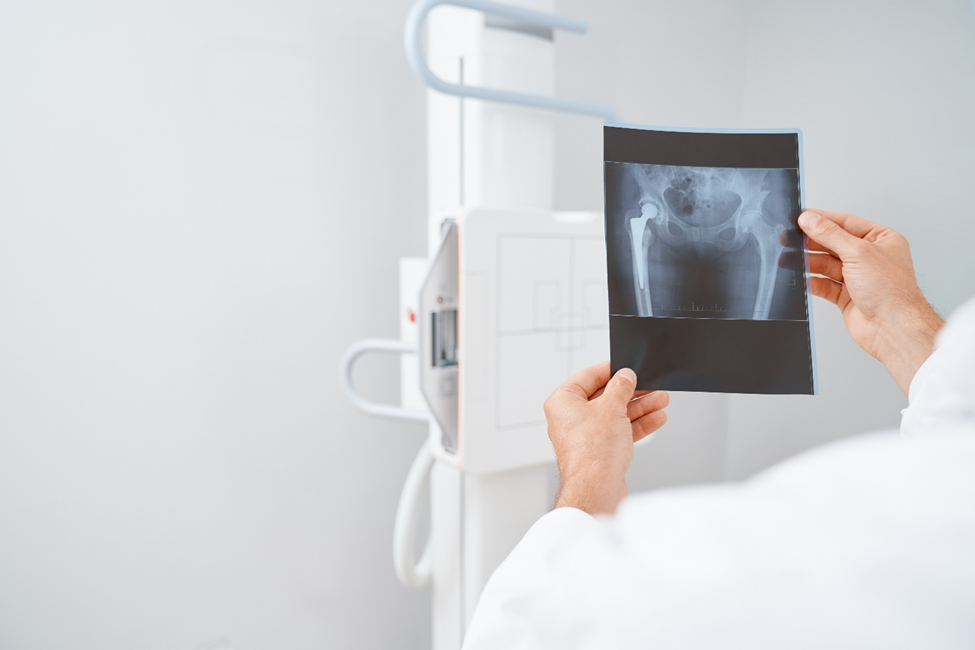
When I was in my 30s I was told that I would need knee replacements in the future due to osteoarthritis and cartilage deterioration in both of my knees. The idea of surgery was scary, especially at that age, and I tried to put it off for as long as possible. I had been working as a movement teacher since the 1970s and I trained in the Feldenkrais Method, graduating in 2005. I wanted to be able to continue with that work, and the pain was making that difficult, so I eventually decided to go ahead with the first of five joint replacement surgeries in 2009. 

My knees had begun to bother me a great deal by that point and then I began to have a pain in my right hip as well. Actually it was pretty difficult to tell if the pain was in my hip or my back. But standing had become my biggest issue, even just standing to cook or at a party was very uncomfortable. 

After some extensive research I eventually chose an orthopedic doctor who had done many knee and hip replacements and whose clinic conducts long term research and follow up on their patients. Researching my surgeon gave me some assurance of quality and provided confidence that I was making the right decision.  

In 2009 the doctor and I both agreed that I needed my right hip replaced and both knees. I had my right hip replaced with a posterior approach in December of that year, then my left knee in May 2010, and the right knee in December 2010. It was a pretty intense two years and I went through extensive rehab during that period. 

Then my left hip was replaced by the same doctor in January 2019, again with a posterior approach. Posterior approaches are less common these days as they often require a longer recovery process. There was also a noticeable difference in the techniques and the aftercare provided in that ten year period. 

In January 2020, just one year after my left hip replacement, I had a spiral fracture of my left femur which left me non-weight bearing for over three months. I was confined to a wheelchair or to hopping on one leg using a walker. This was very confining as I live in an old house so I had to get creative in the ways that I implemented my movement practice. 

Being a Feldenkrais Practitioner who has gone through joint replacement surgery themselves, gave me unique insight into the process and how the Feldenkrais Method can be used at all stages in the process to help with rehabilitation, easing pain and tension, and unlearning habits of movement that are easily be developed when you are in high levels of discomfort. 

The Feldenkrais Method played a big part in my own journey with the joint replacements, as I employed the principles of moving slowly and developing increased self awareness to delay my surgeries and to maximize my recovery afterwards.

I used the Feldenkrais philosophy of moving slowly, with awareness, and I started to explore what movement options were available to me, without any stress of needing to achieve something, taking conscious rests during the process. This allowed me to keep my joints moving and legs strong whether I was seated, lying or standing on one leg. Being non-weight bearing for over three months, I was very concerned that my femur would not heal properly. I would also imagine that I was standing and weight bearing on that leg, which seemed to make a positive difference as well. 

Hopping on one leg using the walker and using a manual wheelchair further damaged my arthritic shoulders and in December 2022 I had a left shoulder replacement as well (Reverse Shoulder Arthroplasty). This decision was easy for me because the pain and dysfunction in my shoulders was affecting my sleep and the use of my arms. 

I used the Feldenkrais Method to prepare for the surgery, immediately after surgery and during my rehab. After the surgery the movements I could do with my shoulder were pretty limited, so I worked around it by stabilizing my arm and moving my rib cage around the shoulder. This helped keep the area active and stopped me from developing negative habits with my breathing during that time. 

Between my first joint replacement in 2009 and my fifth joint replacement in late 2022, I have had the opportunity to see how the surgical, pre-habilitation and rehabilitation processes have evolved over the years. 

The hip replacement surgery and my two knee replacement surgeries in 2009/2010 required home physical therapy for two weeks, then a further six weeks of outpatient physical therapy.  But for my second hip replacement in 2019 I only had physical therapy using an app on my phone. 

Shoulder replacements are more complicated than hip and knee replacements for a variety of reasons and require more specialized after care. For that surgery I had twelve weeks of outpatient physical therapy. 

I have used this experience of deteriorating joints and my own surgeries to learn and study – both from a patient’s and a professional’s perspective. 

The knowledge I gained during the process continuously informs all my rehab work with clients and I have become a bit of an authority on the subject due to my personal experiences. 

As a Feldenkrais practitioner I felt empowered in my own recovery process, which allowed me to be interested and curious about my new movement abilities and to explore them in a safe way. 

After all the surgeries I began moving the joint immediately using my imagination, which is a commonly used technique in Feldenkrais when pain is present – both imagining movement in the joint itself and also imagining movement in other parts of myself which really helped to reduce the tendency to narrowly focus on the challenging area. This is something I had learned from the Feldenkrais Method, and it became an invaluable tool in my own recovery process. 

After a short time I progressed to moving the joint as the protocol allowed, but I continued to use slow and aware movements, with rests after every few repetitions which really helped the learning process. The protocol for each surgery, from each doctor and for each joint is different and it is important to follow the protocol as you begin moving. But this is your body – so the more time you can spend reacquainting with it after surgery the better the outcome will be. 

Currently the protocol with hip and knee replacements is that you are fully weight bearing immediately and up walking within hours of your surgery. You will be informed of exact movement parameters as your new joint begins to heal. Most implants are titanium – a non allergen causing metal – and it will either be cemented in place or held in place until the bone grows into the implant.

The knee implant itself is very stable from the beginning with the difficulty being that the muscles, tendons and ligaments must reform to the new shape of the joint and learn to work in a new way. The hip and knee are usually full weight bearing immediately after surgery. An assistive device is used just after surgery to minimize the risk of falls. The hip and shoulder are more at risk of dislocation just after surgery if you receive a blow to the joint. The shoulder requires special attention due to the shape of the joint and the surrounding musculature. With the reverse shoulder replacement the deltoid reconfigures to take over the work of the rotator cuff and so extra support and time are required before beginning to work on full range of motion and strength. The protocols will give you the amount and type of movement allowed after surgery and during your rehab.  

Using the Feldenkrais Method after surgery helped me feel how the new joint worked and how the initiation of movement and moving through an action was different after surgery. Beginning with moving in my imagination and doing very small movements enabled me to determine the most efficient and pain free way to move with my new joint. Resting after doing any repetitions allows the body time to integrate the new way of moving. 

Your imagination can be a powerful tool, as many of the same neural pathways that activate when you move are also activated when you imagine movement. The muscles, tendons and ligaments are also working when you imagine movement so it can be a wonderful way to begin your movement pre and post surgery. 

Before you begin, go through the movement beginning to end in your mind, noticing how you begin the movement, the path the movement takes, where the movement stops, and how you bring the movement back to the beginning. Do this a few times in your imagination, and then begin the real movement. 

Getting both the maximum range of motion, strength and endurance in the new joint is the goal in rehab and the Feldenkrais Method can make a great contribution to achieving all of these milestones.

As an addition to that, many people going through joint replacement have had a reduction in their life activities because of long term pain and dysfunction in their joints. The dysfunction and pain is different for each person and each joint. But when you are in constant pain, you learn to ignore the joint that is causing the pain. The Feldenkrais Method can be useful in teaching that it is OK to begin to pay attention to the affected part again, enabling you to discover that the pain is greatly reduced and the movement much improved. After surgery there is pain, but it is usually much less than before and totally different. 

The small attentive movements used in the Feldenkrais Method bring many advantages to the affected area to prepare it for rehab – from warming up the muscles, ligaments, tendons, and fascia, increasing blood flow, increasing muscle recruitment, increasing proprioceptive awareness, increasing synovial fluid secretion, encouraging formation of new nerve pathways, facilitating scar tissue formation in the correct direction to giving the soft tissue time to acclimate to the movement requirements of the new joint. This all prepares the joint and tissue to heal, to be able to participate more fully in the rehab and to maintain health and function going forward.

In my own experience the Feldenkrais Method has been helpful in all stages of the process – It helped me delay the surgeries for many years, to prepare myself for the surgeries, and it especially helped me learn to move safely again immediately after surgery and as I worked my way through rehab. 

Ongoing work with the Feldenkrais Method is especially useful in helping establish new movement patterns that maximize the function of the new joint and it can help get rid of any compensatory movements acquired while the joint was deteriorating.

About Jane: 

Jane Johnston began teaching Feldenkrais Method® Awareness Through Movement® classes in 2003 and graduated in 2005. The Feldenkrais Method is her passion and influences all area of her life. Jane specializes in seniors and special needs students and uses the Feldenkrais Method in all her teaching. Jane Johnston began teaching group fitness classes on land and in the water in the 1970s, yoga classes in 1995, personal fitness training in 1996, the Feldenkrais Method in 2003 and Taiji in 2012. Jane is a Guild Certified Feldenkrais Practitioner, holds several advanced land and water pre/post rehab certifications, is a Certified/Registered Yoga Teacher and a Certified Yang Family Tai Chi Instructor.

Jane’s website and email contact:

fitoverforty@jesed.com

Fit Over Forty Fitness Newsletter – July 2023

logo July 2023 Newsletter
Fit Over Forty Fitness Newsletter
What is the best exercise to do? The best exercise is the exercise that you will do! Choose an activity that you like, that is fun, that you can do with friends. All of these ideas will help you stick with your program. My Feldenkrais classes will help you move better and do what you love. Fluid Motion is 11am ET M/W and 10am ET F. FITT Forever is 10am ET T/Th. Classes are drop in and $8/piece if you buy 5 at a time – or $15 per class. Pool classes are 12:30pm M/W/F adjusted according to the weather. So check before coming! I look forward to seeing you soon. hugs Jane

News: Strength Training for Weight Loss For those interested in weight loss and management, here’s more evidence to support the value of strength training to lower body fat. read more »
    Nutrition: Protein in Meat Substitutes for Muscles Can protein in meat substitutes tilt the balance in favor of building muscle to the same degree as their genuine counterparts? read more »
    Mind-Body: Walking and Social Connection People may want to consider supporting and joining simple local activities, such as neighborhood walking, to boost “social capital.” read more »
    Recipe: Chickpea Pasta With Avocado Sauce The nutritional résumé of avocado is a likely reason it can have a positive impact on heart functioning, making this creamy chickpea pasta much more comforting. read more »
    Fitness Handout: Lessons for Living Longer People who live in the world’s Blue Zones are living longer. What are they doing to increase longevity? read more »
  profile avatar Jane Johnston www.fitoverfortyvirginia.com   facebooktwitter  
Powered By IdeaFit To unsubscribe copy and paste this link into your browser: https://ideafit-api.azurewebsites.net/api/webhook/unsubscribe?a=29d5ddd6-ce1e-42ac-a9db-3b30faf775c0&b=97020
IDEA Health & Fitness Association, 9863 Pacific Heights Blvd, Suite E San Diego CA 92121, 800.999.4332 ext. 7
contact@ideafit.com | Search for Fitness Professionals

SenseAbility – Deep Listening

    Photo by Jurica Koletic   Photo by Jurica Koletic

June 9, 2023 Deep Listening Through The Feldenkrais Method®   From the Editors  
There are many things that distinguish the Feldenkrais Method® of somatic education from other traditions of movement learning, but one of the most noteable features of the practice is the unique way in which students are asked to work with their attention. While the sequences of movements taught by Feldenkrais® practitioners are essential to the improvement of posture, flexibility, coordination and overall ease of movement, the “magic” of the method is arguably to be found in the learning process itself. This month, our contributors zero in on the wordless inner dialogue that we will call ‘Deep Listening’.  This month’s interview features Russell Delman, who has been a Feldenkrais trainer for nearly 4 decades and a meditation practitioner for over 5 decades. He explains that just as we all have particular habits of moving our bodies, we also each develop particular habits of moving our attention – and the profound transformations that can happen by creating new attentional habits. Practitioner Sheri Cohen invites the reader to experiment with simple movements and then discover how this experience is transformed through the addition of creative attention (and gives a nod to the American composer Pauline Oliveros who created her own unique Deep Listening® practice). Practitioner Joe Webster explores how Feldenkais practice also uses movement as a vehicle for exploring the psyche.

Jane, Joe and Seth   

Moving Towards Freedom – Developing the Skill of Our Attention
An interview with Russell Delman   Russell Delman  
This month Seth Dellinger interviews Russell Delman about the profound transformations that can take place through deeply studying our habits of attention   Watch Now     Russell Delman   About Russell:  Russell Delman is deeply indebted to his more than 50 years of Zen meditation, movement awareness and somatic psychology for his learning.  Trained by Moshe Feldenkrais from 1975-1978, Russell maintained a close personal relationship with Dr. Feldenkrais until his death. He has helped educate more than 2500 Feldenkrais® practitioners worldwide. He is grateful for the profound influence of Eugene Gendlin, creator of “Focusing”, for his mentoring and friendship. Russell is the founder of The Embodied Life™ School, a deep integration of Meditation, Feldenkrais Movement and Embodied Inquiry. Russell credits his 49 years of marriage to Linda and the raising of their daughter, Liliana, as the greatest teachers in his life. His website is https://theembodiedlife.org    

Listening as Sensing: How Awareness Through Movement® Is Different from Exercise    
Photo by Hayes Potter By Sheri Cohen

Listen, let’s make an important distinction
Many kinds of movement training distinguish themselves by the kinds of exercises that constitute their programs. One might focus on strength, another on flexibility; yet another might claim to improve both. Teachers of Feldenkrais® Awareness Through Movement have a different view altogether. We teach students how to learn about themselves, rather than to repeat exercises.   Read More   Sheri Cohen About Sheri:  Sheri Cohen is an Assistant Trainer of the Feldenkrais Method. She is co-director of the New England Awareness Through Movement® Teacher Training. Sheri first encountered Pauline Oliveros’ Deep Listening® practices in the 1990’s, and had the great privilege to dance in a long-form performance event with Pauline in 2000. Sheri had a years-long collaboration with Stuart Dempster, member of the Deep Listening Band and listener-extraordinaire, in a project we called ROOM. Gratitude to my teachers, Stuart, Pauline and all who have listened deeply to and with me. Her website is www.shericohemovement.com     Learning to Listen to Your ‘Self’ In


  Photo by Sir Manuel  
Photo by Sir Manuel
Movement
By Joe Webster
Somewhere in the mess of our personal experience – meaning our upbringing, schooling, social relationships, romantic relationships, likes, dislikes, ideas, emotions, behavior and habits – is the ‘self’. It is the place that navigates all those experiences and provides us with a sense of ‘me’ in the midst of all that chaos. 

But often we have very strange ideas about ourselves that arise from our lived personal experiences. For example, we might believe we are not a worthwhile person because we are bad at math, or bad at using computers, or singing, or playing badminton or swimming. We might consider ourselves clumsy or bad in the social sphere, or we might have habits that we know are bad for us that we feel unable to change. We might even use self-deprecating language as we go through our daily lives which constantly reaffirms the above sentiments and reinforces our self-beliefs. 

But what would happen if we truly and deeply understood that all of our inabilities, insecurities and unintentional behavior’s were just the effect of what we have learned up to this point in our lives?   Read More   Becci Parsons
About Joe:  Joe began his study of Qi Gong, Taiji and Meditation when he was 18, over 20 years ago. He was lucky to train under a Taiji grand master and lineage holder in both Chan (Zen) and Tibetan Buddhism.
He began studying the Feldenkrais Method® to help deal with some physical challenges developed through overtraining, and some mental / emotional challenges from many years of experiencing anxiety symptoms. The process was so impactful that he decided to undertake the 4-year training and has since qualified as a Feldenkrais® practitioner in 2020. He is now based in Bristol in the UK, and teaches classes and 1 to 1 lessons, locally and online.
  His website is https://www.thoughtfulmovements.co.uk/      

Resources
Experience “Awareness of Breath: The Golden Key”, an Awareness Through Movement® lesson taught by Russell Delman. Click here to listen
Experience “Soft Feet”, an Awareness Through Movement® lesson
taught by Sheri Cohen. Click here to listen 
Experience “Developing Awareness”, a short Feldenkrais® lesson taught by Joe Webster during his Lockdown Lesson series Click here to watch Learn more about Pauline Oliveros, the creator of Deep Listening® Click here to watch    
Did You Know?
You can access free lessons on Feldenkrais.com Listen to them now You can rewatch previous SenseAbility interviews on our Youtube Channel You can find hundreds of Feldenkrais® classes taught online. Go here to find a class you will enjoy.     Twitter Facebook YouTube

Fit Over Forty Fitness June 2023 Newsletter


Nice newsletter this month – note especially the article on longevity and diet – an improvement in your diet by increasing your vegetables and legumes intake may add years to your life. It is never too late to improve your diet. And more movement improves your life in so many ways – increases your wellbeing, your ability to live your life and your fitness. The best exercise is the exercise that you will do! Fluid Motion – will help you be able to move better and do what you love. Fluid Motion is 11am ET M/W and 10am ET F. FITTForever is 10am ET T/Th. . Classes are drop in and $8/piece if you buy 5 at a time – or $15 per class. For those of you who are local, I will let you know when the pool classes will start. I look forward to seeing you soon. hugs Jane
News: Overcoming Exercise BarriersPeople cooking in kitchen to show lifestyle exercise barriers
Older adults benefit from physical activity, yet a less-active model is the trend. Researchers wanted to identify the exercise barriers to a more active lifestyle. read more »

    Nutrition: The Link Between Diet and LongevityOlder man with bag of produce to show link between diet and longevity
Changing your diet at age 20 to include more fruits, vegetables, legumes and whole grains and less red meat and ultraprocessed foods could increase lifespan. read more »

    Mind-Body: Low Physical Activity Still Helps Mental Health Woman walking to show low physical activity levels
Here’s good news to motivate adults to exercise: Low physical activity levels, even those below public health recommendations, can reduce depression risks. read more »

    Recipe: Raspberry-Granola Chia Pudding Raspberry Granola Chia Pudding
Sources of soluble fiber include flax, oats, barley, berries and chia seeds. That makes this raspberry-chia pudding a brain-boosting way to kick off the day. read more »

    Video: Knee Hug to Lunge With Rotation
Keep your chest up and contract the glute of the standing leg. You should feel it stretching your glutes, hamstrings and hip flexors. read more »

  Fit over Forty Jane Johnston www.fitoverfortyvirginia.com   facebooktwitter  
 

Fit Over Forty News


In this issue:  
May and June Fit over Forty happenings  
Articles/Videos of Interest  
Pool and Porch classes  
ClassesBrierStone/Clarke County Parks and Rec – Online  
Clarke Country Parks and Rec Online  
Update your information and sign up for classes  
Fit Over Forty Classses/Private Session   
Fit Over Forty

May and June Fit over Forty happenings  
Dears
Brier Stone Pool will open for classes Memorial Day – Monday May 29th or possibly Friday May 26th! All other classes – Fluid Motion and FITT ForEver and private clients will remain online for the summer. Hope to offer some WATSU® and AquaStretch sessions in the pool later in the year. See the schedule below. 
I hope that you have been receiving and enjoying my other newsletter – Fit Over Forty Fitness Newsletter. It has many exercise and lifestyle tips and a nice recipe each month and news from me. 
See my new feature below – Articles and Videos of Interest. A great video of how people move all over the world and how they use rhythm to help with movement and an article by me on how I use Feldenkrais® in my healing from my joint replacements. 
I hope to see some of you soon. It is great to see both and new students in my online classes and be able to keep up with everyone. Do take care.  
Big virtual hugs
Jane
 
Contact me (text 703-203-2264 or email fitoverforty@jesed.com) or reply to this newsletter if you have questions about classes or the technology.
 
“Movement can replace many drugs, but no drug can ever replace movement.” ibn Sina (Avicenna)  980-1037 CE    

Articles/Videos of Interest  
Feldenkrais and Joint Replacements
I wanted to share with you an article that I wrote for a Feldenkrais publication for the public about my joint replacements. My Feldenkrais Journey through 5 Joint Replacements. As you know the Feldenkrais Method is my passion. 
The Feldenkrais Guild of North America publishes a monthly newsletter for the public – see the March issue here – March SenseAbility https://t.e2ma.net/message/2q0lkg/6xo4lznbMarch
 
See how people around the globe move and use rhythm to enhance and coordinate their movements. 
When The Moment Sings The Muse Within 1996 – YouTube  

Pool and Porch classes  
Brier Stone Pool – Deep Water Aerobic Classes ·      
Monday – 12:30pm ET ·      
Wednesday – 12:30pm ET
Friday – 12:30pm ET
¸. ><((((º>`·.¸¸.·´¯`·…¸><((((º>¸. .·´¯`·.. ><((((º>`·.¸¸.·´¯`·…¸><((((º>  

BrierStone Porch or Deck – Taiji Class

·Wednesday – 5:30pm ET  

ClassesBrierStone/Clarke County Parks and Rec – Online  
Ongoing Online classes May, June, July 2023
Fluid Motion – Feldenkrais Method® Awareness through Movement® Class ·      
Monday – 11:00am ET ·      
Wednesday – 11:00am ET
Friday – 10:00am ET
Fluid Motion is Feldenkrais Method® Awareness through Movement® class – perfect for reclaiming vitality and movements lost due to aging, disease and/or disuse.

FITT ForEver* ·      
Tuesday  – 10:00am ·      
Thursday – 10:00am *FITT

FITTForEver – 1 full hour of core work using a variety of methods – an unstable surface, Yoga and Pilates moves, a small ball, arm strengthening using small hand weights and body weight,  leg exercises and long cool down with stretching, yoga and Tai Chi moves, and Feldenkrais. Renew your fitness and your shape. (time may change in September)    

Clarke Country Parks and Rec Online  
Fluid Motion Feldenkrais Method® Awareness through Movement Classes®
Monday/Wednesday- 11:00am ET Wednesday – 6pm ET Friday – 10:00am ET

FITTForEver

Tuesday/Thursday 10:00am ET

To sign up: Clarke County Parks and Rec – 540-955-5140 or contact me fitoverforty@jesed.com or 703-203-2264  

Update your information and sign up for classes  
Please everyone, update your information, by completing a client record on my website and signing a new liability waiver. here is the link: Client sign up!   Sign up for classes by the month with Clarke County Parks and Rec or  with me as a drop in student.  To sign up for classes 
email fitoverforty@jesed.com  to obtain the link to class
You can now set up and account and sign up online: Set up an account and sign up for all classes online. You will automatically get the sign in information
 
5 classes for $40 Pay here 
 
1 class $12 (drop in only possible if the series is a go) Pay for Single Class
 Owe another amount? Pay Balance
Payment box will open in a new window or in a new tab in your browser When you have signed up, please try and register for a class! trying to get this working!

Fit Over Forty Classses/Private Session     
FITT ForEver is standing arm and balance work, floor work – Pilates, abs/core and legs, stretching and yoga. We use light hand weights, a small ball, a strap and a mat. If you have questions, please contact me – I would love to see some of you back at class.
 
Fluid Motion – Would you like to reconnect with your body? Be able to get back to walking in the park, exercise class, traveling? The Feldenkrais Method® classes can help you get back into an active vibrant life style. If you have never tried a Feldenkrais Methodt® Awareness through Movement® class, this is a perfect time. Get on your mat or on your bed, put your camera so that I can see you and join in. A perfect way to de-stress, relax and move.   
 
Pool – at BrierStone will open the end of May. We are planning on classes M/W/F at 12:30pm. I expect pool to be perfect this year!!! It is cleaning up as we speak.
  
TaiJi – I would love to get this class going again. Contact me if you are interested – on the Brier Stone porch or deck for the summer?? We will revisit Yang Family classics – Qong Form – 10 movement form, 13 movement form and 16 movement form and learn a new Modern Style form with a few adaptations just for us.  
 
(I am aware that some of you would rather have in person classes. If you are interested in going into the Clarke Country Parks and Rec building and then participating in classes, please contact Shannon or me.) 
For online classes sign up for classes through the Clarke County Parks and Rec by the month or get a drop in pass from me. Which ever way works best for you. 
 
Fit Over Forty   Contact me at
fitoverforty@jesed.com, 703-203-2264 or 540-955-4169, @FitFeldy   
  Jane Johnston, BS Psy
Guild Certified Feldenkrais Practitioner
® Aquatic Therapy and Rehab Exercise Specialist Certified Instructor Yang Family Style Tai Chi Quan Post-Rehab Conditioning Specialist Registered/Certified Yoga Teacher Registered Somatic Therapist Adapted Aquatics Instructor Cancer Exercise Specialist AquaStretch™ Facilitator 703-203-2264                                                              fitoverforty@jesed.com 540-955-4169                                                       www.fitoverfortyvirginia.com @FitFeldy                                   www. Facebook.com/FitOverFortyVirginia Skype: JaneCuttingSmartJohnston   

“Exercise is the key to long-term management of most medical conditions.”   Michael K. Jones, PhD, PT

“Walking is man’s best medicine.”   Hippocrates        

¸. ><((((º>`·.¸¸.·´¯`·…¸><((((º>¸. .·´¯`·.. ><((((º>`·.¸¸.·´¯`·…¸><((((º>  
  In the United States of America, the following are registered service marks, collective marks or certification marks of the Feldenkrais Guild of North America: Feldenkrais®, Feldenkrais Method®, Functional Integration® Awareness Through Movement®; Guild Certified Feldenkrais Teacher®; and The Feldenkrais Guild®. The following are trademarks, service marks or certification marks of the Feldenkrais Guild of North America: ATMSM, FISM, Guild Certified Feldenkrais PractitionerCM, and Feldenkrais™.  All photographs © 2007 Rosalie O´Connor. All rights reserved.      
Fit Over Forty • 3927 Lord Fairfax Highway • Berryville, VA 22611
Subscribe | Unsubscribe | Send to a Friend | Preferences | Report Spam
Powered by MyNewsletterBuilder

Tai Chi

“Tai Chi is a gentle form of exercise that can help maintain strength, flexibility, and balance, and could be the perfect activity for the rest of your life. Tai chi is often described as “meditation in motion,” but it might well be called “medication in motion.” There is growing evidence that this mind-body practice, which originated in China as a martial art, has value in treating or preventing many health problems.”— Harvard Medical School, Edited August 2019

Fit Over Forty Fitness Newsletter – May 2023

Fit Over Forty Fitness Newsletter


Spring is definitely here! Daffodils and redbuds gone, trees leafed out – all except walnuts!! Remember, as senior exercisers we can do most exercises as long as we have a longer warmup and go at our own pace. Feldenkrais is a great adjunct to your exercise program to keep your body moving fluidly and comfortably. Note the articles below about weight lifting and sleep and eating for heart health. Join us online for FITT ForEver and Fluid Motion to reconnect with old friends and meet new people. Fluid Motion is 11am ET M/W and 10am ET F. FITTForever is 10am ET T/Th. . Classes are drop in and $8/piece if you buy 5 at a time – or $12 per class. Planning on having my pool open and in use by the end of May!! Movement improves your life in so many ways. I look forward to seeing you soon. hugs Jane

News: Lift Weights for Better Sleep Quality

According to research, resistance training may be superior for sleep quality improvement than aerobic exercise or a combined weight/cardio workout.read more »


  Nutrition: 10 Principles for Heart Health Nutrition

Intending to improve heart health and reduce the risk of cardiovascular disease, the American Heart Association released tips for heart health nutrition.read more »


  Mind-Body: Exercise, Adolescents and Depression

Offering cardio programs for adolescents may be an effective and powerful way to help ease symptoms of depression.read more »


  Recipe: Steamed Salmon Parcels

The evidence continues to pour in that there is a boatload of reasons to get more omega-3 fatty acids in our diets—making this steamed salmon recipe a heart-healthy win.read more »


  Video: One-Arm Triceps Pushup

This move is an excellent way to work the triceps. Assume a pushup position, bend one arm and powerfully reach the other arm forward, abs engaged. read more »
  Jane Johnston www.fitoverfortyvirginia.com 

Go back

Your message has been sent

Warning
Warning
Warning
Warning

Warning.

To unsubscribe copy and paste this link into your browser: https://ideafit-api.azurewebsites.net/unsubscribe
IDEA Health & Fitness Association, 9863 Pacific Heights Blvd, Suite E San Diego CA 92121, 800.999.4332 ext. 7
contact@ideafit.com | Search for Fitness Professionals

SenseAbility – Children and the Feldenkrais Method

Photo by Jordan Christian Photo by Jordan ChristianMay 12, 2023Exploring Children’s Motor Development With The Feldenkrais Method® From the Editors
The Feldenkrais Method® of somatic education can help improve the movement, coordination and overall function of people of all ages – including the very youngest. In this month’s issue of SenseAbility, our contributors explore how children – including those with special needs – can benefit from the unique insights of Moshe Feldenkrais into human learning. In addition, readers will find many clues about why the developmental movement patterns of early childhood are so often central to the ways that Feldenkrais® practitioners assist adults in discovering healthier movement.Chrish Kresge, who was worked with children for three decades, talks to SenseAbility editor Seth Dellinger about the central importance of creating connection with a child to support their learning. Likewise, Cyndi Manes emphasizes how both the Feldenkrais pracititoner and the child’s parent can intentionally relate to the child’s potential rather than their limitations – and how this differs from the approach of most traditional health care. Matty Wilkinson shares a short video of himself working with a little girl to give you a direct sense of what Feldenkrais for children looks like. Alex Schaefer describes how his 2-year-old niece inspires his approach to teaching adults and his own experience of movement.

Jane, Joe and Seth  What Parents Of Children With Learning Challenges Need To Know About Motor DevelopmentAn interview with Chrish Kresge
This month Seth Dellinger interviews Chish Kresge about how parents can support their children with special needs by working with a Feldenkrais practitioner. Watch Now Faye Berton About Chrish: Chrish is a Guild Certified Feldenkrais Practitioner® who works with people of all ages and backgrounds using movement with awareness as a primary tool for improving functional health and vitality. This includes coordination, balance, self-awareness, posture and voice. She is also an actor and director. Chrish is passionate about using her diverse skills and background to help people find their innate potency and poise.

Chrish also works with individuals with stroke and other disabilities, and is a graduate of the Anat Baniel Neuromovement® Method® for Children.

She co-edited a book about the Feldenkrais Method, Learning Through Movement, published by Handspring Publishing (UK) in 2020. feldenkraismovementbook.com

She maintains an active private practice in her studio in Washington, D.C.
Her website is krishkresge.com
What To Expect When A Feldenkrais® Practitioner 
Works With Your Neuro-Diverse Child
By Cyndi ManesIf you are the parent of a neurodiverse child, you have probably researched ways to facilitate your child’s development. While working with practitioners within the traditional medical model, you have probably repeatedly heard what problems your child has and what all the deficits are. As Feldenkrais® Practitioners, we can offer you a very different perspective. We look for and identify your child’s strengths, the skills that provide the basis for all future progress. Most importantly the whole child is important and any lack is addressed as just a part of this whole.
Read More Becci Parsons About Cyndi: Cyndi Manes is a retired Physical Therapist who has been a Feldenkrais® Practitioner for more than 20 years. She has specialized in working with neurodiverse children. Cyndi has taken Chava Shelhav’s ChildSpace training which emphasized parent /infant interactions to promote child development and Anat Baniel’s mastery training, Working with Children with Special Needs where she improved her handling techniques. Her primary mentor is Ellen Soloway. Cyndi has synthesized her diverse trainings into an effective approach to ensure her client’s success. Her website is www.cyndimanes.com
Curiosity, Connection And Learning: 
A Developmental Perspective On The Art Of Learning
Photo by Matty WilkinsonBy Matty Wilkinson

A child’s sense of self develops in relationship with the environment: interacting, sensing, moving, responding & engaging with people, objects, the ground, and the field of gravity. As a Feldenkrais® and Anat Baniel Method® practitioner, when I work with children I try to create conditions that support their innate capacity to learn. The video below is from 2019, and is one example of how this can look. It shows an individual lesson, what Feldenkrais practitioners call Functional Integration®. The principles I discuss in the video apply to how both children and adults develop through relationships, and how we can create experiences and environments that are better suited for learning.

In the video you will see that my client and I are in a playful and attuned dance. There is humor, listening and responding, moments of peekaboo, laughter, and rich attention to the process of moving together. The lesson begins in a position that feels comfortable and familiar to her. She is at ease and feels safe. When I touch her my intention is to help her to sense herself, as she is. I’m not imposing, correcting, or trying to change her.  I help support the weight of her head, arms and chest. This reduces the muscular effort she’s using to counter gravity, and helps her to sense herself with more nuance and subtlety. In the narration I highlight some of the key elements of the interaction that support learning. These include: curiosity, connection, attention, reversibility, variation, rest, and acceptance.

I hope the video and commentary give you a better understanding of how some of the ideas underlying the Feldenkrais Method® of somatic education can be applied with children, and how an interaction based on these principles might unfold. No two lessons will look the same, because the process grows out of a responsive “movement conversation” between two people. 

Notice what you sense in yourself as you watch and listen. How is what you see and hear different from, or perhaps similar to, other kinds of learning interventions, including those for children with special needs?
Watch the video Matty Wilkinson About Matty: Matty is a Feldenkrais Method® and Anat Baniel Method® for Children practitioner in private practice in Boston and online. He is fascinated by the developmental process and believes in the innate potential of each individual to learn. In 2001 Matty began teaching preschool, studying child development, and joined a Feldenkrais® training. In 2006 Matty trained with Anat Baniel to work with children with special needs, and he earned a MA in Child Development from Tufts University in 2009. As a neurodevelopmental consultant, Matty coaches parents and educators to create optimal conditions for children’s learning, applying his expertise as an early childhood educator, sensorimotor practitioner, and father. In  2020 Matty and two colleagues co-founded The Moving Center. Together they collaborate online and in-person internationally, teaching children, parents and the professionals who work with them. 

His website is: www.mattywilkinson.com
What Kids Can Teach Us
Photo by Fabian CentenoBy Alex Schaefer

Greetings and pleasant movement to you, my name is Alex Schaefer, I am a physical therapist and Feldenkrais® Practitioner. After 22 years working in orthopedics, neurology, sports medicine, and geriatrics in a variety of locations across the country, I have recently moved back home to Illinois to start my own private practice incorporating physical therapy and the Feldenkrais Method® of somatic education together. It is my professional dream job and I’m excited to blend the concepts of motor learning, individualized self care, and neuroplasticity from the Feldenkrais Method to an audience looking for something more than traditional physical therapy.

Now that I have a schedule of my own making, I have the great pleasure of spending a full day once a week with my niece who will be 2 years old later in May.

Read More Becci Parsons About Alex: Alex Schaefer is a physical therapist, movement educator, martial artist and Feldenkrais®️ pratitioner. For the past 20 years, he has worked in a variety of settings including out-patient orthopedics, sports medicine, and neurology. His post graduate interests include: structural integration, pain neuroscience education, meditation, and visceral manipulation. He teaches live ATM® classes 5 days a week at his office in O’Fallon IL.
His website is:recoverythroughmovement.com
ResourcesExperience “Baby Rolling”, an Awareness Through Movement® lesson taught by Chrish Kresge. Click here to listenExperience “Titling Legs on Back- Dependence, Maturation & Verticality”, an Awareness Through Movement® lesson taught by Matty Wilkinson. 
Click here to listen 
(Original lesson source David Zemach Bersin)Check out an interview with Carla Reed, another Feldenkrais® pracitioner who specializes in working with special needs children, from the December 2022 issue of SenseAbility. Click here to watchAdults in Feldenkrais® classes often move like babies! Click here to watch


Did You Know?
You can access free lessons on Feldenkrais.com Listen to them nowYou can rewatch previous SenseAbility interviews on our Youtube Channel
You can find hundreds of Feldenkrais® classes taught online. Go here to find a class you will enjoy. The following are service marks, trademarks, collective, or certification marks of the Feldenkrais Guild® of North America in the US: Feldenkrais Guild®, Feldenkrais®, Feldenkrais Method®, Functional Integration®, FI®, Awareness Through Movement®, ATM®, Guild Certified Feldenkrais Teacher®, GCFT(CM), Guild Certified Feldenkrais PractitionerCM, GCFP(CM), Certified Feldenkrais Awareness Through Movement Teacher(CM), CFATMT(CM), Feldenkrais Journal(TM), Friends of Feldenkrais(SM), and FGNA Feldenkrais Method Logo.
The following are service marks, trademarks, or certification marks of the Feldenkrais Guild® of North America in Canada: Feldenkrais GuildTM, Feldenkrais®, Feldenkrais® Method or Feldenkrais Method(TM), Awareness Through Movement®, ATM(TM), Prise de conscience par le mouvement(MD), Functional Integration®, FI(TM), L’intégration fonctionnelle(MD), Guild Certified Feldenkrais Teacher(TM) , GCFT(TM), Guild Certified Feldenkrais Practitioner(TM), GCFP(TM), Certified Feldenkrais Awareness Through Movement Teacher(TM), CFATMT(TM), Friends of Feldenkrais(SM), Feldenkrais Journal(TM), and FGNA Feldenkrais Method Logo.
FGNA | 401 Edgewater Place, Suite 600, Wakefield, MA 01880
Share this email: Manage your preferences | Opt out using TrueRemove®
Got this as a forward? Sign up to receive our future emails.
View this email online. 401 Edgewater Place, Suite 600
Wakefield, MA | 01880 US
This email was sent to fitoverforty@jesed.com.
To continue receiving our emails, add us to your address book.